
by Peter Remington | Nov 29, 2021 | Insights

WHAT CONTROLS YOUR thoughts becomes your fate, your god, your path in life. What you focus on becomes your destiny. Every word you speak, every thought you have, is shaping the blueprint.
Henry Van Dyke, an author and statesman of the 19th and 20th centuries, wrote a poem about this, on which I often reflect. It’s called “Thoughts Are Things,” and it goes like this:
I hold it true that thoughts are things;
They’re endowed with bodies and breath and wings;
And that we send them forth to fill
The world with good results, or ill.
That which we call our secret thought
Speeds forth to earth’s remotest spot,
Leaving its blessings or its woes
Like tracks behind it as it goes.
We build our future thought by thought,
For good or ill yet know it not.
Yet so the universe was wrought.
Thought is another name for fate.
Choose, then, thy destiny and wait,
For love brings love and hate brings hate.
The one amazing thing about thought is you cannot have a positive thought and a negative thought occupy the same space at the same time. Opposing elements do not co-exist. Happy and sad, pleasure and pain, light and darkness, fear and courage are all examples of opposing emotions. Las Vegas is built on winning more than 50 percent of the time and people losing more than 50 percent of the time. So is your life.
The more you think about how you can enhance another person’s life, the more your life will be enhanced. With this action you can see the development and growth in the individual. You can feel the fulfillment of your actions. Your positive actions towards the individual will release the ego, fear and anxiety in your life and allow for the feeling of contentment, accomplishment, happiness, freedom and energy to enter your system.
The more you enhance a situation or an individual, the more you enhance yourself. You release “spiritual endorphins” into your system, you experience a euphoric feeling, a “runner’s high,” but it’s a spiritual high. The thoughts you have are now elevated to a level where there is no room for negativity. Even when you are attacked by chaos, and evil-thinking people, your first thought is how to learn from this experience and not react negatively to the experience.
The opposite works in the same way. The more you think on how to hurt someone and create gain for yourself, the more you only create hurt for yourself. While you see the individual lose because of your actions, you too, will feel a loss. Your negativity towards others will create insecurity, low self-esteem, anxiety, fear, jealousy, reactiveness and more debilitating emotions causing you to be held captive to a negative way of life. You become a back-stabber, telling stories of others just to make yourself look good. However, you are discovered by the multitudes, and your circle of friends diminishes and the buzz of booze or the delight of drugs is what you use to enhance your spirit. You have lost control.
How do you get back on track? How can you get back to good and blessings and love? You need to look inwardly a find the reason for your negativity and resist the urge to react to all things that bother you. This maybe electrifying to you, but a light bulb has a positive pole and a negative pole attached by a wire filament that create resistance. The greater the resistance, the brighter the light. The more you resist the urge to negatively react to a circumstance, the more light you will generate inside you. The more positive your thoughts become, the more influential you become, the more control you will have.
Peter Remington is an executive at Houston CityBook and also a business consultant and life coach. For more information on him and his Prepare 4 More, visit here.

by Peter Remington | Nov 15, 2021 | Insights
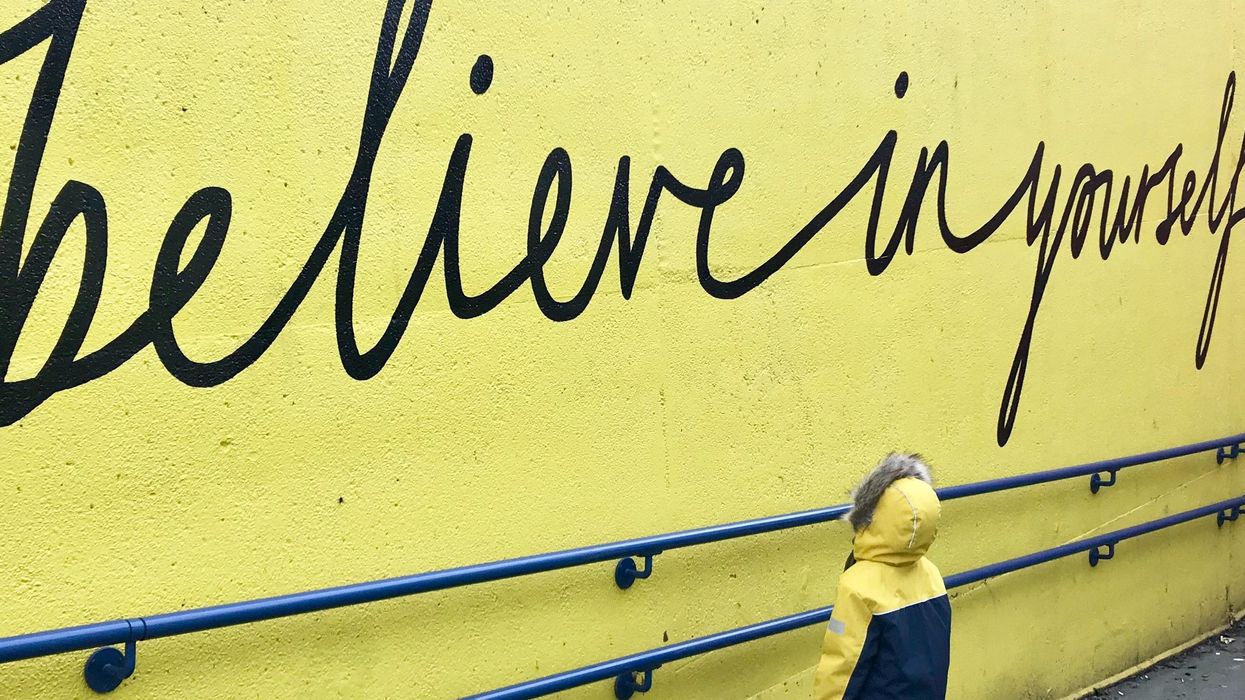
IT IS YOUR divine right to be successful.
All faith-based readings tell you this, that faith, determination and patience play a very important role in our life. Without applying these three attributes into your daily routine, you may leave yourself open to doubt, procrastination and restlessness and cause you to deviate and lose the game. Success, by definition, may vary from person to person, but, in whatever field you want success, you need to have faith, determination and patience. It can be family success, relationship success, health success, spiritual success, money success, business success — whatever you define as success. That is your watermark. However, to become successful, first you have to faith and belief that you deserve your success.
Missouri is called the “Show Me State” because they want to see physical proof of what is being stated. It’s the adage of, “I’ll believe it when I see it.” Faith, however, goes by the law of, “When I believe it, I will see it.”
When you tell someone that you have faith in them, you are basically seeing that individual manifesting whatever you asked of them or what they want for themselves. The word faith is used 23 times in the book of Hebrews. It states that it is by faith that Moses parted the sea, by faith that David bested Goliath, by faith that Rebecca had a child and so on. Therefore, it is by faith that you will become successful in what you want to be successful in.
Determination, persistence, tenacity, grit, willpower, whatever you want to call it, is the next key to success. How determined are you to achieve your success goal? And How are you applying your time and energy towards it?
I ran my first NYC marathon in 1988. It took me nearly five hours to finish, and, as I entered Central Park off Fifth Avenue, I heard a woman say, “Look at that guy in the white tank top, he is determined to make it.” I was and I did. How determined you are determines how successful you will be. Knowing that there will be obstacles in your journey and having the determination to successfully overcome those challenges is key. Determination gives you the ability to hold that picture of success to the exclusion of anything else.
Having the determination to do the work needed to be successful is key. Let’s suppose that you are in a situation or a circumstance in your life in which the people around you are not supportive. It seems that there is a strong force outside of you wanting you to lose or wanting you to stray from your divine right. It will be your determination, your irrational determination to succeed, beginning to express itself in action, that will repel all negative distractions. Because as faith sees you as a success, determination will get you there.
Patience is the third key to success; you must have patience to achieve your success. Everything in life comes on time, not necessarily on your time, but on time. If you’re looking for overnight success, go buy a lottery ticket. However, you may be buying them for years and be disappointed. The Saguaro cactus of Arizona, in its journey, will grow a quarter inch to half an inch in two years. It will grow about three feet in 20-50 years. However, over its lifespan of up to 200 years, it will reach 75 feet or more. Maybe your journey will be like the Saguaro, or it may be more like that of a blade of grass. Most grass seeds will start growing in about 10-14 days, but sometimes it can take up to 30 days. Either way you need to be realistic with your expectations on your journey. You didn’t gain weight overnight, so you won’t lose it overnight.
Napoleon Hill, the author of Think and Grow Rich, states that most people give up just before they strike it rich. He tells the story of a miner who quits the mine and sells it. The new owner continues the dig and three feet later, he hits gold.
Lack of evidence is not evidence of lack. Keep the faith in what you vision for yourself, be determined to do the things necessary to get you to your vision, and be patient in knowing that it is your divine right to succeed. And it’s just three feet away.
The temptation to quit is always the strongest just before you succeed.
Peter Remington is an executive at Houston CityBook and also a business consultant and life coach. For more information on him and his Prepare 4 More, visit here.

by Peter Remington | Oct 25, 2021 | Insights

SOME SAY, “LIFE is a bitch and then you die.” I say, life is a coach and then you thrive!
Since you were born, life has been coaching you. Life coached you to never give up and to use your assets. It taught you that you don’t have to crawl through life, that if you keep trying, if you use the assets that are around you, like a chair, a table, a helping hand, you can stand and you can stand by yourself. And that, even though you fall flat on your butt, you can get back up and stand longer and longer. Then one day you’re walking, then running, as if you’d been doing it all along.
Life coached you that, an iron could be hot even when it’s not plugged in. Life coached you to test the water because it, too, can be hot or cold. Life coached you to be aware of your surroundings, to look twice before you cross the street, to measure twice before you cut. Life will also coach you, if it hasn’t already, to seek knowledge in your day-to-day journey, to learn the lesson from each experience in your day because knowledge is the result of experience.
You acquire knowledge from your education and experiences in life. And the more education and experiences you have in life, the more knowledge you will have obtained. However, reader-based knowledge is not as strong as experienced-based knowledge. Neither is as strong as the combination of the two.
In the movie Good Will Hunting, Robin Williams is sitting on a park bench with Matt Damon, looking over a river, when he states: “If I asked you about art, you’d probably give me the skinny on every art book ever written. Michelangelo, you know a lot about him. Life’s work, political aspirations, him and the pope, sexual orientations, the whole works, right? But I’ll bet you can’t tell me what it smells like in the Sistine Chapel. You’ve never actually stood there and looked up at that beautiful ceiling.” A classic scene that cements the idea that knowledge comes by both experience and study. I will call it “educaperience.”
Some individuals have knowledge the size of a postage stamp and others the size of a mid-west farm. Almost everyone can become knowledgeable but not everyone can be wise. Wisdom is the application of putting knowledge to good use. Knowledge is knowing what to do, wisdom is how to do it. Wisdom is acknowledging that there is a lesson in the knowledge/experience you just had and that the lesson should not be deleted into the trash bin of you mind.
A friend of mine was driving and using the car’s GPS to get to a destination while talking on his cell and missed his appointed exit on the highway. Not a big deal; because of “recalculating” he was able to exit off the next ramp and circle around and still get to his destination. While driving down the access road, an individual pulled out of a parking lot and broadsided his car. After getting the full details from him I asked, “So what was the lesson you learned?”
“What do you mean? I didn’t cause the accident,” he said.
“You didn’t?!” I replied. “You were in heavy traffic, using your GPS, talking on the phone, and you missed your exit. Had you not missed your exit, you wouldn’t have been on the access road and get hit.” Of course, you can say that had he got off the correct exit that he might have been involved in a greater accident. However, wisdom would say, “Although I have knowledge, through experience, on how to drive and follow a GPS and talk on the phone, it would be wise to try not doing all three at the same time!”
The lesson.
There are two types of knowledge — general knowledge and specialized knowledge. The simplest way to define them is that general knowledge is a mile wide and an inch deep. Specialized knowledge is an inch wide and a mile deep. But they are both ineffective without having the wisdom on how to best utilize the knowledge. Be wise enough to accept all things that happen to you and to learn the lesson from your experiences. Thrive and become wiser.
We just spent almost two years listening to the most knowledgeable, wisest people on Earth about viruses and disease. Yet their knowledge today is much stronger than it was two years ago. I just hope they learned a lesson and not try to rationalize their mistakes.
Remember this, no matter how much knowledge you have, use your wisdom to know that you don’t know what you don’t know.
Peter Remington is an executive at Houston CityBook and also a business consultant and life coach. For more information on him and his Prepare 4 More, visit here.

by Peter Remington | Oct 18, 2021 | Insights

“BEGIN WITH THE end in mind” is Stephen Covey’s second habit in his groundbreaking book, The Seven Habits of Highly Effective People. It is the concept of seeing the end-result of your vision and working backwards till you get to where you are today and can see the steps necessary to get there. He tells the story of when President John F. Kennedy made the statement that the United States would be the first nation to land a man on the moon before the end of the decade — and the scientists said, “First, let’s see how we get them back.” A key result, wouldn’t you think?
I always wondered something about learning the game of golf, in which the object of the game is to take a stick and hit a little white ball with that stick, into a cup, located in middle of a nicely groomed piece of grass, 400 yards away. I wondered, if you started at the cup and practiced going backwards from the cup might you be able to get a “hole in one” every time? Now that’s a vision!
Seeing the steps you need to take to achieve your vision is seeing the goals within your goals. Every goal is made up of little goals or steps that I call your CAN-DO goals: Your CAN-DO goals are:
C for continuous, they are a lifelong commitment.
A for actionable, they are task driven and move you toward to your vision.
N for necessary, they are what you need to do.
D for daily, they are done today, not tomorrow.
And O for obedient to the process that allsuccessful people have gone through.
Your CAN-DO goals are those goals you always do. They are the steppingstones that pave the way to your larger goals. Then on to your vision.
For example, if you want to get into shape or give up 15 pounds to the universe. (I don’t call it losing weight. If you lose something you usually try to find it. Your keys, your wallet, your cell phone. I don’t want to find my weight back, so I say, “I am giving it up.” All 15 pounds to the universe. I don’t want it back!)So you set up a program to run three miles a day for the next 90 days. Consume only 1,200 calories per day and avoid going to parties where you may fall prey to junk food and cocktails. Is this a CAN-DO goal? Or will you miss some days of training or want to go to a party? The goal of a goal is to succeed. Not to set yourself up to fail. CAN-DO goals are those things that you must do daily to get you to the top of “Mt. My Vision.”
Achieving goals on a regular basis is what makes your world go around. However, if I were a goal, I would be suffering from low self-esteem. Here is something I overheard a goal say in a therapy session:
“Everyone talks about me in groups, they make me bigger than life, they promise me all kinds of things and enumerate all the steps they will take to help me be accomplished. Then after three or four weeks, they just let me down. They toss me aside and say they will get back to me tomorrow, but they don’t. Maybe the next day, but they don’t.”
Goals are the most abused and seldom-used success creators available to mankind. So how is it that we neglect our goals after such a short period-of-time?
I have seen more ideas on achieving goals and have read more books on goals than I care to admit. I have tried all the acronyms: SMART goals, STAR goals, RIVAS goals. I have read Goals for Dummies, Living Without Goalsand so on. In the end, I have discovered that goals are simply the rungs of your vision ladder. Just as you climb a ladder to clean your gutters or to reach the top shelf for something you need, you do it one rung at a time. Well, you use the same process in climbing to your vision.
When climbing a ladder, you never try to jump to the fourth rung do you? Of course not. Most people walk up to a ladder, grab its sides and then place one hand on the fifth rung and lift their foot to the first rung and, with one small leap of faith, they propel themselves forward and upward. You settle securely on the first rung of your journey. With that accomplished, your other hand reaches one rung up and your other foot raises to catch the second rung and, with a mighty oomph, you continue your climb.
The process continues, one step at a time until you get to your destination. And, as each rung is accomplished, you look up at your destination, and you can feel the excitement in yourself. You are getting closer and closer. You can see the end, you can see yourselfin the end.
Your vision is right in front of you and then, as if to make sure you are really accomplishing what you didn’t think you could accomplish, you turn and look down to see how far you’ve come and all of a sudden … you see how high you are. You’ve never been this high before, you’ve gone past your personal beliefs about your own abilities. Self-doubt starts to set in, fear starts to fill your nervous system and you freeze. Your distractors start to kick-in. However, you want to become bigger than your fears.
The temptation to quit is always the strongest just before you succeed. “Is this truly the right goal, do I have a Plan B, will I be able to sustain my goal?”
Yes, it’s the right goal, because you believed in it enough that you saw the vision of the goal. I say, you will see it when you believe it.
If you have a Plan B, then you are expecting Plan A to fail. To overcome obstacles, there is no Plan B, only variations of Plan A.
You don’t achieve a goal, you become the goal! It is part of your daily existence and, as you strengthen and build upon your goal, so does the sustainability of the goal.
It is with that knowledge that you continue your journey and never look down again.
Peter Remington is an executive at Houston CityBook and also a business consultant and life coach. For more information on him and his Prepare 4 More, visit here.

by Peter Remington | Oct 4, 2021 | Insights

NAOMI OSAKA, MEGHAN Markle, Prince Harry, Meryl Streep and, most recently, Simone Biles, to list a few, have all come publicly out about their battles with depression. Just this week a friend told me about losing two friends to suicide from depression.
Depression is not unique to anyone and holds no prejudice to race, socio-economic or demographic group, or caste. The American Psychiatric Association says that one out of 10 people suffer from depression. I’m surprised it’s that low, with the many levels of depression that get recorded. Depression ranges in seriousness from mild, temporary episodes of sadness to severe, persistent depression and the most severe being clinical depression.
I would imagine that everyone has had an episode of sadness from a loss of a loved one, a pet, a job, a relationship — which could cause a gain or loss of weight, or cause someone to medicate more with booze or drugs, which causes one to stay in bed feeling sorry for oneself, which causes more depression and sadness. It’s like a whirlpool of sludge pulling you further down and down. It is plausible to think that a small triggering event could escalate into a deeper form of depression depending on how it is received.
In 1993 the company I worked for at the time got sold, and the new company only retained two out of 47 employees, and I wasn’t one of the lucky ones. I had moved from a very high-profile position with a company in New York City to San Francisco for a new experience, and three years later I’m out of work. I experienced depression. I didn’t know it, but I was depressed, and it took four weeks for me to figure it out because all I could do was complain and drink.
Eventually, I searched out help and, through therapy, not drinking, better eating and exercise, I snapped out of it and bounced forward to a better job. I discovered, through my experience that, it was OK to not be OK. Additionally, it taught me a new level of appreciation for people who are having a bout of not being OK, and that I didn’t need to get emotionally involved with their experience because I was OK. It was OK for me to be OK. It’s also OK for you to be OK, even when your friend is not. You don’t need to be sad, nor do you need to feel guilty because you’re OK.
It’s best for you and those around you to be OK, because you can share your story on how you got OK. You have figured out that’s it’s OK to not be OK, even as it’s not OKto do nothing about it.
If you want to beat depression you need to do a regression. A regression analysis on yourself. Like any analysis, you have an independent variable and a constant. The constant is you and the independent variable is all the “stuff” that happens during your day. Did you watch CNN(Constantly Negative News), the weather, the traffic, your boss’ mood, your colleague’s mood, you’re not in a relationship or maybe the wrong one, you missed an appointment, what the scale read, what someone said, bad hair day, the death of an icon, so many things that could trigger an emotion from you.
Why are you affected by these things? Why do you take ownership of these things? Why do you allow a pattern of binge eating or drinking, or let bad associations creep into your life? All these independent variables are not you the constant, but how you react to these variables is what starts to create you and your wellbeing. Seek out help from a professional therapist or coach. Do the things that are good for you and to you. Be a willing participant in your own rescue.
Accept the fact that it is OK to not be OK. Just be willing to do something about it.

by Peter Remington | Sep 27, 2021 | Insights

WHILE WORKING ON my five-year-old laptop, I noticed that it was getting slower and slower. It wouldn’t connect to the internet as fast, and moving from one program to another was taking more time. When I would start it, it seemed like it would take forever for the programs to open. So, I told myself it was time to buy a new laptop.
That night, after shopping all day for a computer, I was watching TV and happened to see a commercial for a website where they would do a free diagnostic on my PC. After three minutes of analysis, the diagnosis appeared before me: Your computer had 572 bugs! That explained a lot. The catch was that there was a fee of close to $400 to fix them. So instead, I brought my computer to my IT guy, and six hours later it was as good as new. She was debugged! She booted right up and flew through the internet with the greatest of speed.
I sat back and contemplated the experience. I was about ready to spend $2,000 plus on a new computer. Not knowing any better, I would have taken my new, never-been-programmed, never been touched, pristine purchase and connected it to my old one with a cord — very similar to the umbilical cord that gave me life — and I would have downloaded all my files to my new computer.
Allmy files and allmy bugs! 572 bugs that my brand-new, never-been-programmed computer would have received. Bugs that were not the computers’ own. Bugs that would have slowed it down before it even had a chance to get to work and prove itself. I would have then blamed it for poor performance, not being good enough, and not being fast enough. It would no longer appear to be modern. It would have wasted my time and money and energy and made me question why I even make the purchase. I would have continued to blame it for any mistakes. Bad new computer.
Then it occurred to me to wonder how many bugs had I been given at birth? If my parents had 572 “bugs” when they conceived me, did I inherit them? And, as a result, in the process of growing up, was I not fast enough (as they told me), or good enough, or sleek and sexy enough? The answer was yes. For the first 18 years of my life I was programmed by my parents, siblings, friends, church, schoolteachers, coaches and anyone else that had an influence on me. The programs I received were going right into my subconscious being where they would harbor themselves and grow stronger and stronger with every triggering event.
If I failed at a task, then I wasn’t good enough. If I was defeated in sports, then I wasn’t strong or fast enough. If I got a “C” in a class, I wasn’t smart enough. My dad told me that I wouldn’t amount to anything. All those programs were firmly rooted in my subconscious, and they were determined to prove themselves right.
I hadn’t realized that some of them might be wrong. After all, these programs were given to me by some credible sources: my parents, teachers and church. Some of the programs were perfect, and some not so much. However, the original programming took place well before I had the ability to write my own program. The program given to me was not my program or life’s screenplay for me to act out; it was everyone else’s screenplay. I needed to erase the negative program that was given to me. I needed to edit that screenplay and rewrite it so I could star in my own movie called Peter’s Life the Way It Was Meant to Be!
We are suffering from a case of mistaken identity.
Because we have been programmed to be.
Someone else’s idea of who we are.
Not who we are really meant to be.
You see, you were born perfect. However, you were born perfect into an imperfect world by imperfect parents, who themselves were born perfect into an imperfect world by imperfect parents, who were also born perfect into an imperfect world by imperfect parents, all the way back to the beginning of time.
Unfortunately, there is no website called www.debug-me.com, where I could have a free diagnosis of my bugs and where I would gladly pay $384.00 to be de-bugged. That’s not the case in life, is it? Instead, I needed to plug into myself and go back through the programs of my subconscious and see what downloads were good for me and which ones were not. When I got to a program that I did not like, I would then erase it. First, though, I had to look at the event and see what the meaning of it was. What was the emotion that I tied to it? What did I receive from it? What was the lesson that life was giving me? I would say to myself, “That wasn’t me. That was my father, mother, brother, church, teacher, etc., acting out their own scenario on me.” I would erase or delete that program. It was as if I was bringing myself back to the original manufacturer’s settings. Then reprogramed myself to who I wanted to be.
You can do everything you want to do. Everything, everything, everything, and all things. Unless you choose to believe whoever it was who told you can’t!
Peter Remington is an executive at Houston CityBook and also a business consultant and life coach. For more information on him and his Prepare 4 More, visit here.

Recent Comments